
A SpaceX rocket will collide with the Moon’s surface in August


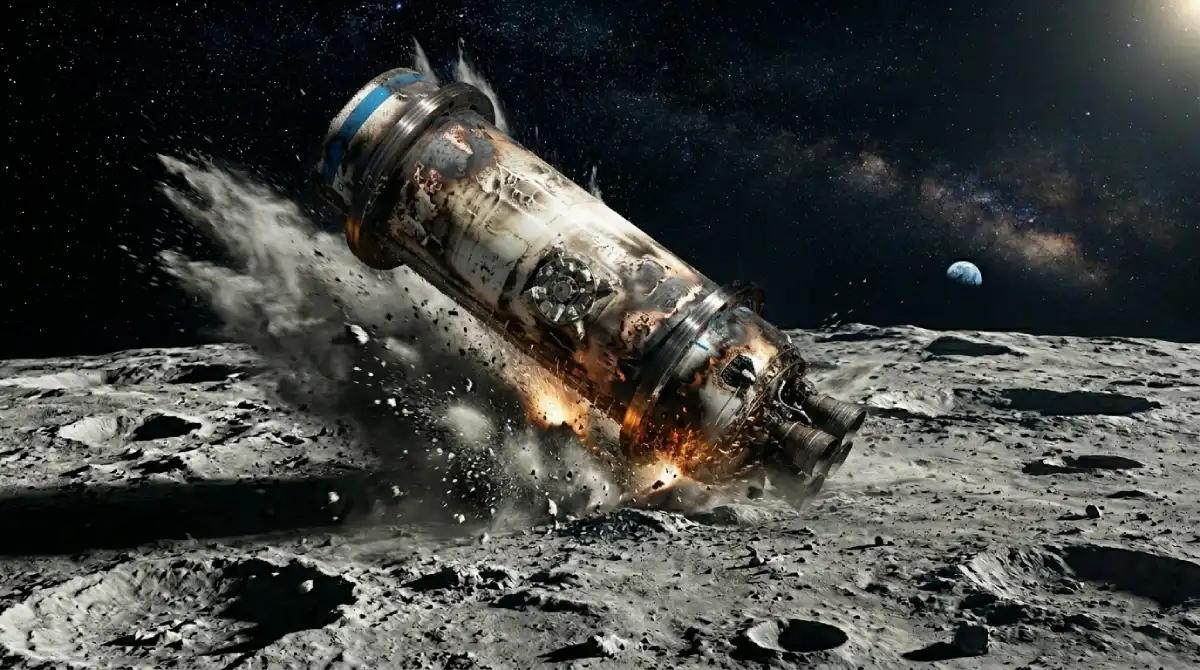
On August 5, 2026, the Moon will gain a new mark on its surface. According to calculations by Bill Gray, an experienced astronomer and developer of the Project Pluto software, the upper stage of a SpaceX Falcon 9 rocket is on a trajectory for an inevitable collision with Earth’s natural satellite.
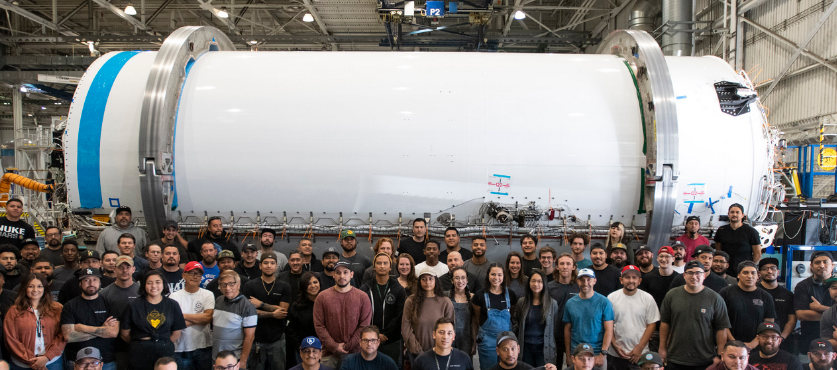
The object was part of the mission that, on January 15, 2025, sent the Blue Ghost and Hakuto-R landers toward the Moon. After completing its job of propelling the payloads, the rocket stage was left drifting in space, becoming yet another fragment in the growing cloud of space debris orbiting Earth and its surroundings.
When and where the impact will occur
The estimated impact is set for 06:44 UTC (1:44 a.m. CDT), near the Einstein Crater, located on the lunar limb—the visible edge of the Moon.
The rocket stage will strike the surface at about 2.43 km/s (approximately 8,700 km/h). Since the Moon has no atmosphere, there will be no drag to slow the object down, making the collision direct and unavoidable.
According to Gray, the event poses no risk to Earth but raises important concerns:
“There is no danger to anyone, but this highlights a certain lack of care in how we dispose of space hardware.”
Will it be possible to observe the impact?
For astronomy enthusiasts, expectations of directly observing the event are low. Although the Moon will be visible across much of South America and in the eastern half of the United States and Canada at the time of impact, the collision is expected to be too small to be detected with conventional telescopes.
Even so, there is a possibility of later confirmation. NASA’s Lunar Reconnaissance Orbiter (LRO) may fly over the area days afterward to capture images of the newly formed crater.

Space debris: a growing challenge
Tracking this type of object is not simple. Unlike natural asteroids, artificial fragments are influenced by solar radiation pressure, which subtly and unpredictably alters their trajectories.
Gray points out:
“Asteroid search programs prefer not to observe space junk. Every minute spent on debris is time lost in the search for potentially hazardous objects.”
According to the expert, these remnants only receive attention when they move slowly and can be mistaken for potentially hazardous asteroids.
Not an isolated case
This is not the first incident of its kind. In 2022, a Chinese rocket stage collided with the far side of the Moon, creating an unusual double crater.
Events like this reinforce concerns about the growing amount of debris in cislunar space, especially at a time when powers such as the United States and China are accelerating plans to establish permanent bases on the Moon.
Sources: Project Pluto, mysteryplanet.com.ar
Quer continuar acompanhando conteúdos como este? Junte-se a nós no Facebook e participe da nossa comunidade!
Seguir no Facebook