Experts Refute Brazilian Study That Questions the Authenticity of the Shroud of Turin


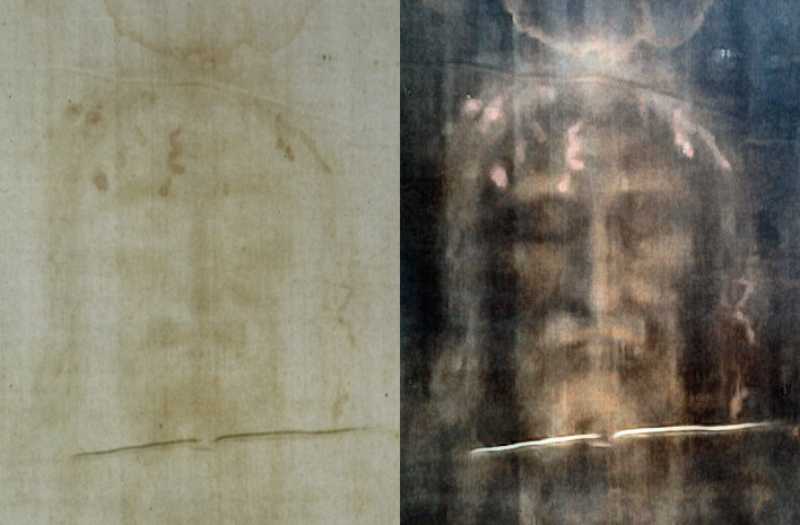
Sindonologist researchers — specialists dedicated to the scientific and historical study of the Shroud of Turin — have published a strong critique of a Brazilian study that had suggested the famous image imprinted on the cloth did not result from contact with a human body, but rather from an impression made over a bas-relief. The response, presented in an academic commentary in the same journal, Archaeometry, that published the original study, points to several methodological flaws and historical gaps in the Brazilian author’s argument.
The study in question was conducted by Cícero Moraes, a digital designer and 3D researcher, who used three-dimensional modeling software to simulate how a linen cloth — similar to the Shroud of Turin — would behave when placed over a human body versus a bas-relief mold. Moraes concluded that the marks and contours visible on the fabric are more consistent with the imprint of a flat or slightly raised sculpture rather than the form of a real body. This conclusion led to the hypothesis that the Shroud is, in fact, a medieval religious work of art rather than an authentic first-century burial cloth.
However, in the commentary published by three renowned specialists in the field — Tristan Casabianca, Emanuela Marinelli, and Alessandro Piana — the researchers systematically challenge Moraes’ conclusions. According to them, the Brazilian study presents “ambiguous objectives, methodological flaws, and fallacious reasoning,” and is unable to accurately reflect the physical and chemical characteristics of the Shroud, as detailed by Vatican News.
Among the points criticized are the selection of incomplete digital models, the failure to consider essential anatomical properties, and the lack of solid historical grounding.
Critics point out that Moraes’ modeling ignores fundamental characteristics of the cloth, such as the extreme superficiality of the image — recorded in only a fraction of the thickness of the linen fibers — as well as the multiple independent confirmations of the presence of blood, elements that would not be compatible with any known medieval artistic practice, as emphasized in an analysis published by Gaudium Press. Moreover, they stress that earlier versions of the bas-relief hypothesis had already been discussed and dismissed in academic journals since the 1980s, and that other, more robust historical explanations were not properly considered.
The Catholic Church itself, through its International Center for Studies on the Shroud of Turin (CISS) and the Archbishop of Turin, Cardinal Roberto Repole, had criticized the Brazilian study when it gained prominence last year, as reported by the Zenit news agency, noting that the superficial conclusions do not withstand a more in-depth analysis of the data.
The Shroud of Turin remains one of the most debated artifacts in the world. While many faithful venerate it as the cloth that wrapped the body of Jesus Christ after the crucifixion, others question its origin based on radiocarbon dating that places the fabric in the Middle Ages (14th century) and on differing scientific and historical interpretations. The controversy intensifies as new techniques, such as 3D modeling and digital analysis, enter the debate, yet without providing a definitive consensus.
This recent academic exchange illustrates not only the complexity of the issue, but also the difficulty of reconciling innovative digital approaches with the rigorous standards that govern historical and scientific studies of such sensitive artifacts. Even while acknowledging the originality of using contemporary technology, specialists emphasize that any theory regarding the origin of the Shroud must be grounded in evidence that takes into account not only simulations, but also thoroughly verified physical, chemical, archaeological data and historical contexts.
Quer continuar acompanhando conteúdos como este? Junte-se a nós no Facebook e participe da nossa comunidade!
Seguir no Facebook