
Pope Leo XIV warns about the risks of AI in new encyclical


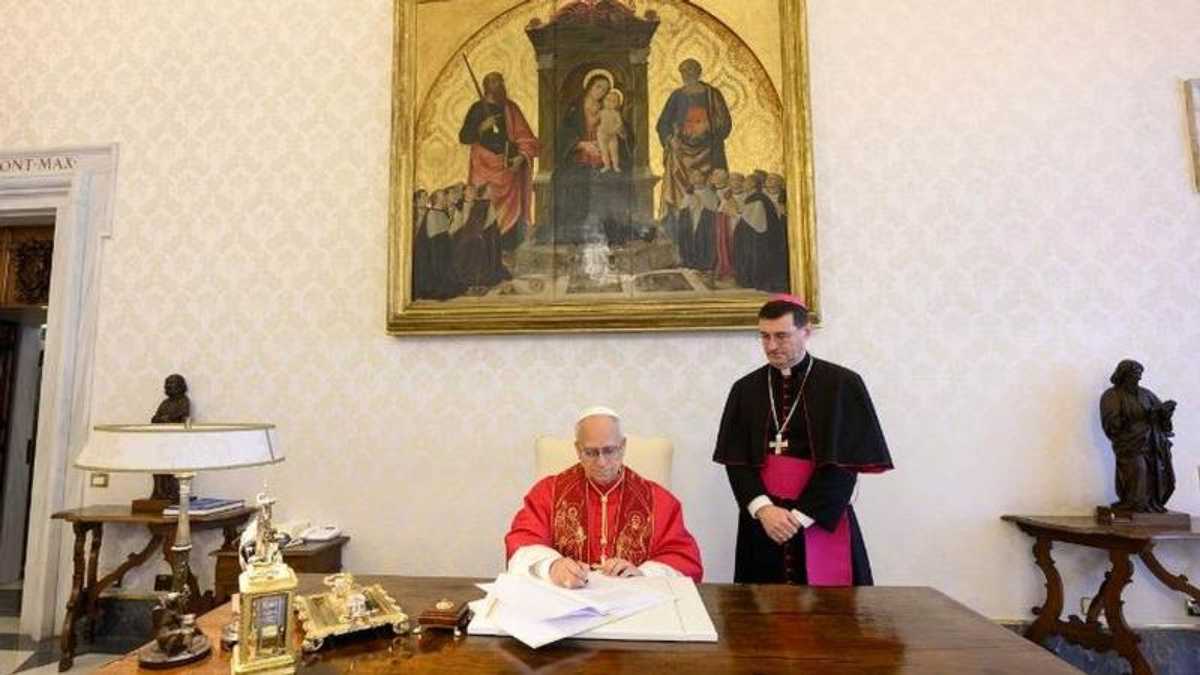
Pope Leo XIV published his first encyclical, “Magnifica Humanitas,” warning about the impact of artificial intelligence on society. Released in the context of the 135th anniversary of Rerum Novarum by Pope Leo XIII, the document calls for stricter ethical rules governing the development of new technologies and states that humanity is facing a “decisive choice” amid the expansion of the digital age.
At the very beginning of the text, Pope Leo XIV compares today’s technological landscape to the Tower of Babel described in the Bible. According to him, society must choose between building “a new Tower of Babel” or developing a model of coexistence in which technology and human dignity advance together.
Throughout its five chapters, the encyclical argues that technology is not inherently negative, but also insists that it is not neutral. For the pontiff, digital systems reflect the interests of those who design, finance, and control them. The document criticizes the concentration of technological power in large corporations and calls for international regulatory mechanisms.
The text also examines the effects of artificial intelligence on the labor market, privacy, and geopolitics. One of its strongest passages addresses the military use of AI. The pope calls for the disarmament of autonomous combat systems and states that no algorithm can make war “morally acceptable.”
According to the encyclical, automating decisions over life and death reduces victims to statistical data and lowers the moral barriers to armed conflict. The document also links digital transformation to growing social inequality and new forms of economic exploitation.
Pope Leo XIV cites the situation of workers involved in the extraction of rare earth minerals used by the technology industry. The text denounces what it describes as inhumane conditions in parts of the production chain for these minerals and associates digital advancement with contemporary forms of economic colonialism.
The encyclical also devotes space to the issue of migration. The pontiff states that the treatment of migrants and refugees will be a central test of social justice in the age of digital surveillance and technological control.
In another passage, Pope Leo XIV calls for internal reform within the Catholic Church itself. The pope urges that ecclesiastical structures be “purified” and states that victims of spiritual, economic, and sexual abuse must be heard.
Following the release of the document, analysts and theologians began debating the scope of the proposals presented by the Holy See. Some experts believe the encyclical expands the Church’s role in discussions surrounding artificial intelligence and global technological governance.
Other groups associated with more critical religious interpretations argue that the risks posed by AI go beyond ethical and regulatory concerns. These groups link the expansion of centralized digital systems to debates over mass surveillance, economic control, and the concentration of informational power.
The publication places the Holy See at the center of international discussions on technology and digital regulation. The encyclical argues that technological progress must remain subordinate to human dignity rather than to the consolidation of technocratic power structures.
Quer continuar acompanhando conteúdos como este? Junte-se a nós no Facebook e participe da nossa comunidade!
Seguir no Facebook