Study reveals an ancient Amazonian civilization with millions of inhabitants


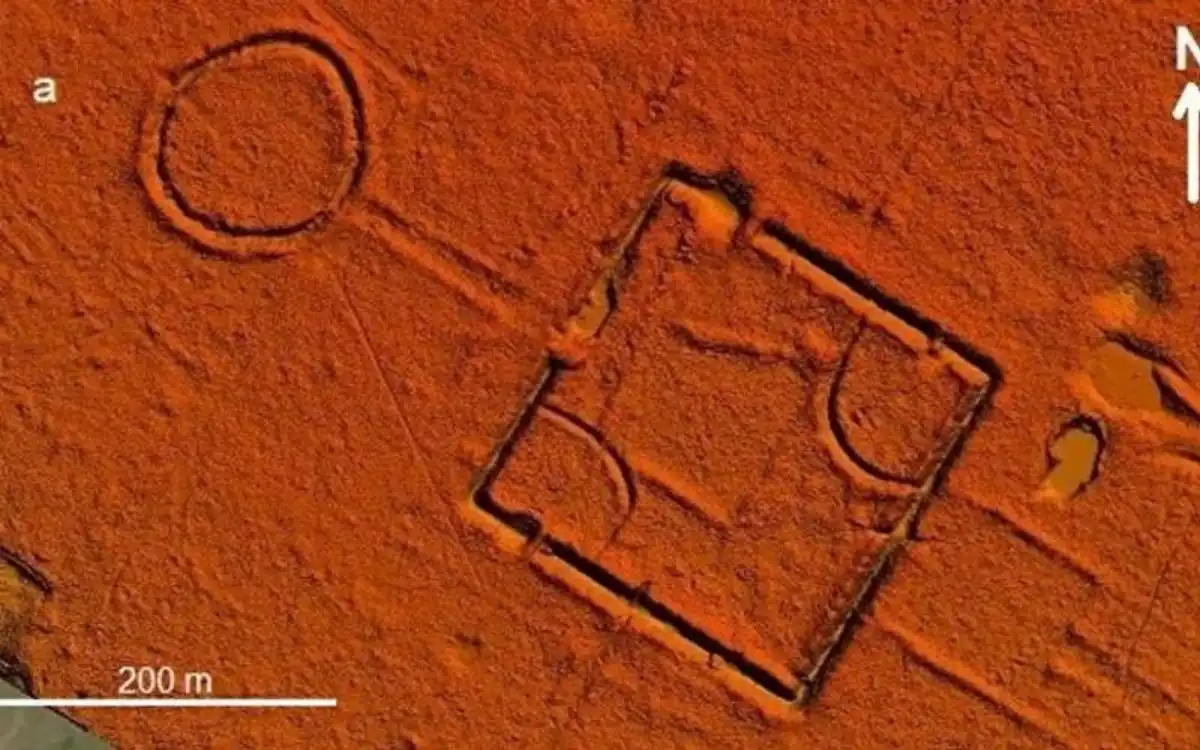
A study published in the journal Nature has concluded that the Aquiry culture occupied a vast area of the southwestern Amazon, extensively modified the landscape, and built thousands of ceremonial structures between approximately 600 BC and AD 850. The research suggests that this network of communities transformed about 183,000 square kilometers (70,700 square miles) of forest, an area comparable in size to present-day Syria.
The discovery was made by an international team of researchers using LiDAR (Light Detection and Ranging) technology, an airborne laser scanning system capable of mapping terrain beneath the Amazon’s dense forest canopy. The survey flights covered approximately 4,500 square kilometers (1,737 square miles), revealing hundreds of monumental ceremonial centers and extensive networks of straight roads connecting different settlements.
According to the authors, the data allowed researchers to estimate the existence of more than 20,000 ceremonial earthworks across the region occupied by the Aquiry culture. The largest complex identified covers approximately 50 hectares (124 acres).

The study, led by researchers affiliated with the University of Helsinki, calls for a significant revision of the traditional view of the pre-Columbian Amazon. For decades, the prevailing belief was that the rainforest was inhabited only by small, scattered groups. The new research points to the existence of a large, organized society with an estimated population of between 1.25 million and 3 million people at the beginning of the first millennium.
“Our findings completely change our understanding of the Amazon region’s past,” said Martti Pärssinen, professor emeritus at the University of Helsinki and director of the study.
The team identified Amazonian geoglyphs—large geometric earthworks—distributed across different areas of the Aquiry territory. Because the region has limited stone resources, these constructions represent a form of monumental architecture based on earthen embankments, ditches, and platforms.
According to Juha Hyyppä of the Finnish Geospatial Research Institute, the survey was designed to cover a representative continuous area. The flights followed routes of approximately 450 kilometers (280 miles), mapping one-kilometer-wide (0.6-mile-wide) strips at regular intervals.
The researchers also concluded that the inhabitants of the Aquiry culture profoundly transformed the Amazonian ecosystem. The study indicates that extensive bamboo-dominated forest areas were cleared through controlled burning for the cultivation of corn (maize), cassava (manioc), and squash, as well as for the construction of ceremonial centers and avenues.

The study also indicates that these populations deliberately favored tree species with high nutritional value. Among them are the Brazil nut tree and the peach palm, both of which are now widely distributed throughout the Amazon.
“The research demonstrates that human impact on the Amazon environment was far greater than previously believed,” said Pärssinen. According to him, the findings also have implications for carbon studies and climate models related to the forest’s environmental history.
The political organization of the Aquiry culture, according to the researchers, did not resemble a centralized empire. Pirjo Kristiina Virtanen, professor of Indigenous Studies at the University of Helsinki, stated that the society was composed of a decentralized network of different communities.
Oral traditions from Indigenous peoples in the region suggest that the large earthwork enclosures served as places for intercommunity gatherings, political decision-making, rituals, feasts, athletic competitions, and ball games.

The reason for the disappearance of this civilization around AD 850 remains unknown. Researchers note that this period roughly coincides with the collapse of the Classic Maya civilization in Central America, although the study does not establish a causal relationship between the two events.
The research involved the participation of the University of Helsinki, the University of Turku, Aarhus University, the National Land Survey of Finland, and partner institutions in the Amazon region. The project was coordinated by the Ibero-American Institute of Finland and the Factum Foundation in Madrid.
Quer continuar acompanhando conteúdos como este? Junte-se a nós no Facebook e participe da nossa comunidade!
Seguir no Facebook