Space weather may be “hiding” messages from alien civilizations, study suggests


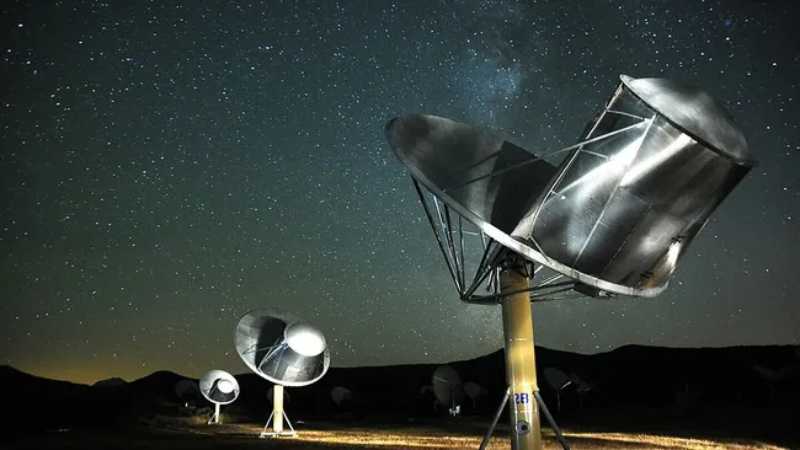
A new scientific study proposes an intriguing explanation for one of astronomy’s biggest questions: why we have not yet found signs of intelligent life in the universe. According to the research, so-called space weather around other stars may be interfering with radio transmissions sent by potential extraterrestrial civilizations, making these signals virtually invisible to our instruments.
The work was conducted by researchers from the SETI Institute and published on March 5 in the scientific journal The Astrophysical Journal.
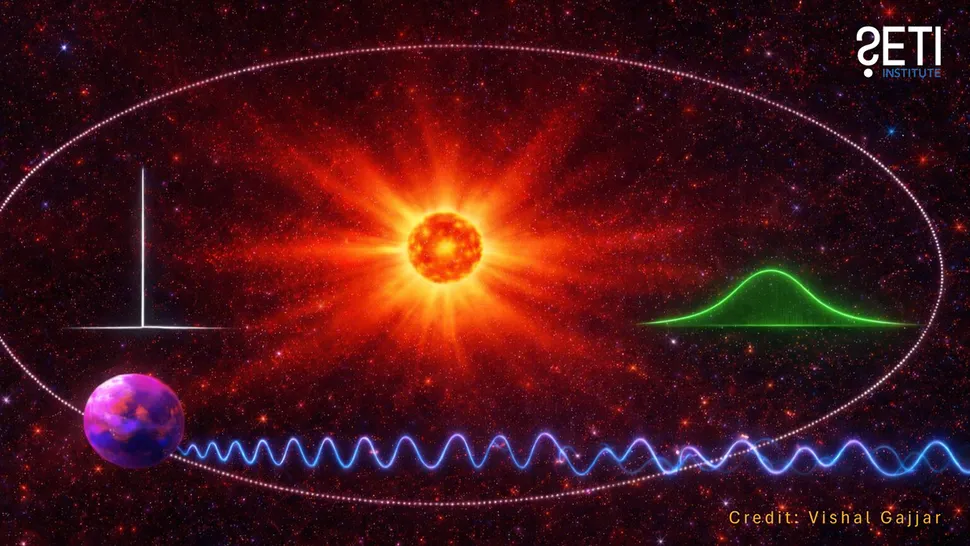
The term space weather describes electromagnetic disturbances caused by phenomena such as intense stellar winds and coronal mass ejections — massive explosions of plasma released by stars. These events hurl huge amounts of electrons and plasma into the space surrounding the star.
These charged particles can directly affect radio waves passing through the region. When this happens, the signal may experience several physical effects, such as dispersion or frequency scattering, which reduce its strength and make it much harder to detect across vast cosmic distances.
Scientists working in the field known as SETI (Search for Extraterrestrial Intelligence) typically search for extremely narrow radio signals called narrowband signals.
These signals occupy only a few hertz of bandwidth and are considered strong candidates because nature almost never produces emissions that precise, which would suggest an artificial origin.
However, the new study shows that the environment around the source star itself may broaden these signals, spreading their energy across a wider range of frequencies and weakening their intensity.
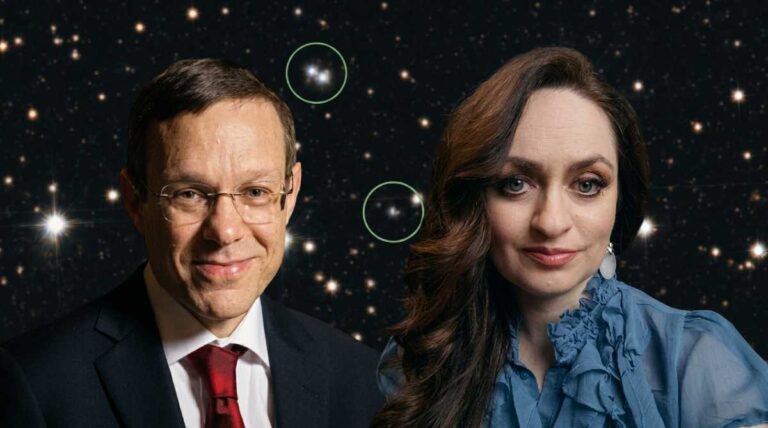
According to Vishal Gajjar, one of the study’s authors, this could cause extraterrestrial transmissions to go unnoticed:
“SETI searches are typically optimized for extremely narrow signals. If a signal is broadened by the environment around its own star, it may fall below our detection thresholds, even though it is actually there.”
One of the main effects identified is diffractive scintillation, caused by the interaction of the signal with clouds of plasma. This process spreads the signal’s power across a wider range of frequencies, weakening its apparent strength for telescopes.
To better understand the impact of this phenomenon, Gajjar and his colleague Grayce Brown analyzed radio communication data between Earth and spacecraft within the Solar System, measuring how solar wind and coronal mass ejections affect the signals.
The scientists then applied these results to simulations involving one million of the nearest stars, including:
- Sun-like stars
- Red dwarfs, which make up roughly 75% of the stars in the Milky Way
The simulation focused on signals in the 1 GHz range, a frequency commonly used in SETI searches, near the emission frequency of interstellar hydrogen (1.42 GHz).
The results showed that:
- 70% of stars could broaden signals by more than 1 Hz
- 30% of stars could produce broadening greater than 10 Hz
- Coronal mass ejections could expand a signal by over 1,000 Hz, making it virtually invisible to narrowband detectors
For more than 66 years, scientists have been searching for signs of alien technology in the cosmos without success. This mystery is often referred to as the “Great Silence.”
Projects like SETI@home, launched in 1999, have already analyzed enormous amounts of astronomical data, and today about 100 candidate signals remain, although the likelihood that they are of extraterrestrial origin is considered low.
The new study suggests that the silence may not be real.
If space weather around other stars is distorting extraterrestrial transmissions, we may simply not be listening the right way.
The authors argue that future SETI searches should take these distortions into account to improve detection methods.
According to Brown:
“By quantifying how stellar activity can reshape narrow signals, we can design searches that are more aligned with what actually reaches Earth — not just with what might have been transmitted.”
The researchers raise a provocative possibility: the universe may be teeming with technological signals — but they are too distorted for our current algorithms to recognize.
Quer continuar acompanhando conteúdos como este? Junte-se a nós no Facebook e participe da nossa comunidade!
Seguir no Facebook