
Space Force General Warns of the Risk of War in Space


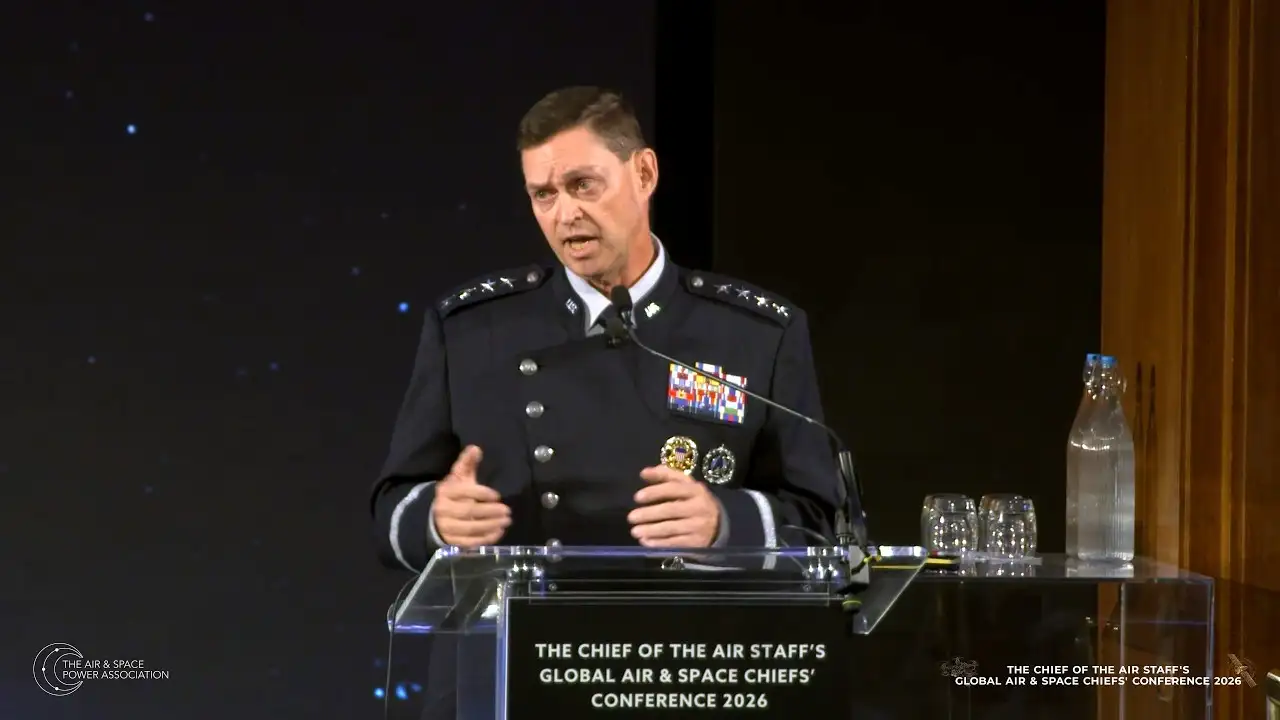
General Chance Saltzman, the outgoing Chief of Space Operations of the U.S. Space Force, said that no nation or military force would be able to remain outside a future armed conflict that extends into space.
Saltzman made the remarks during the 2026 Air and Space Chiefs Conference, delivering his final public speech before stepping down from command in August.
According to the general, orbital dynamics make space fundamentally different from land, sea, and air domains. In the event of a conflict, the movement of satellites and other orbital systems would leave the space assets of multiple nations exposed within the same combat zone.
“If conflict extends into space, none of us will be able to avoid the war zone,” Saltzman said. He explained that orbital mechanics would place the space capabilities of different military forces directly within the affected area.
His concerns also stem from the growing concentration of satellites in Earth’s orbit. The destruction of a single spacecraft could generate massive amounts of debris, increasing the risk of collisions with other objects and potentially rendering certain orbital regions hazardous for years.
As an example, Saltzman pointed to Russia’s 2021 anti-satellite test, which created a persistent cloud of debris that has since forced the International Space Station (ISS) to perform multiple collision-avoidance maneuvers.
Despite the warning, the general advocated for an international cooperative approach. He argued that because the consequences of a space conflict would be shared by all spacefaring nations, responsibility for maintaining the security and stability of the orbital environment should also be shared.
Saltzman added that the potentially devastating consequences of warfare in space should make deterrence a common objective among nations.
In previous remarks, the military leader described space defense as “the ultimate team sport,” emphasizing the scale and complexity of the orbital domain. During his tenure, which began in 2022, the U.S. Space Force shifted its focus toward operational readiness and warfighting capabilities.
“We’re no longer talking only about theories or plans. We’re talking about real operational warfare, space effects, and the Guardians who deliver them,” he said recently.
To succeed Saltzman, President Donald Trump nominated Lt. Gen. Douglas A. Schiess, then serving as Vice Chief of Space Operations. During his confirmation hearing, Schiess advocated for a $71.1 billion budget to counter China’s expanding military space capabilities.
Quer continuar acompanhando conteúdos como este? Junte-se a nós no Facebook e participe da nossa comunidade!
Seguir no Facebook