
AI Creates the First Functional Synthetic Viruses in the Laboratory


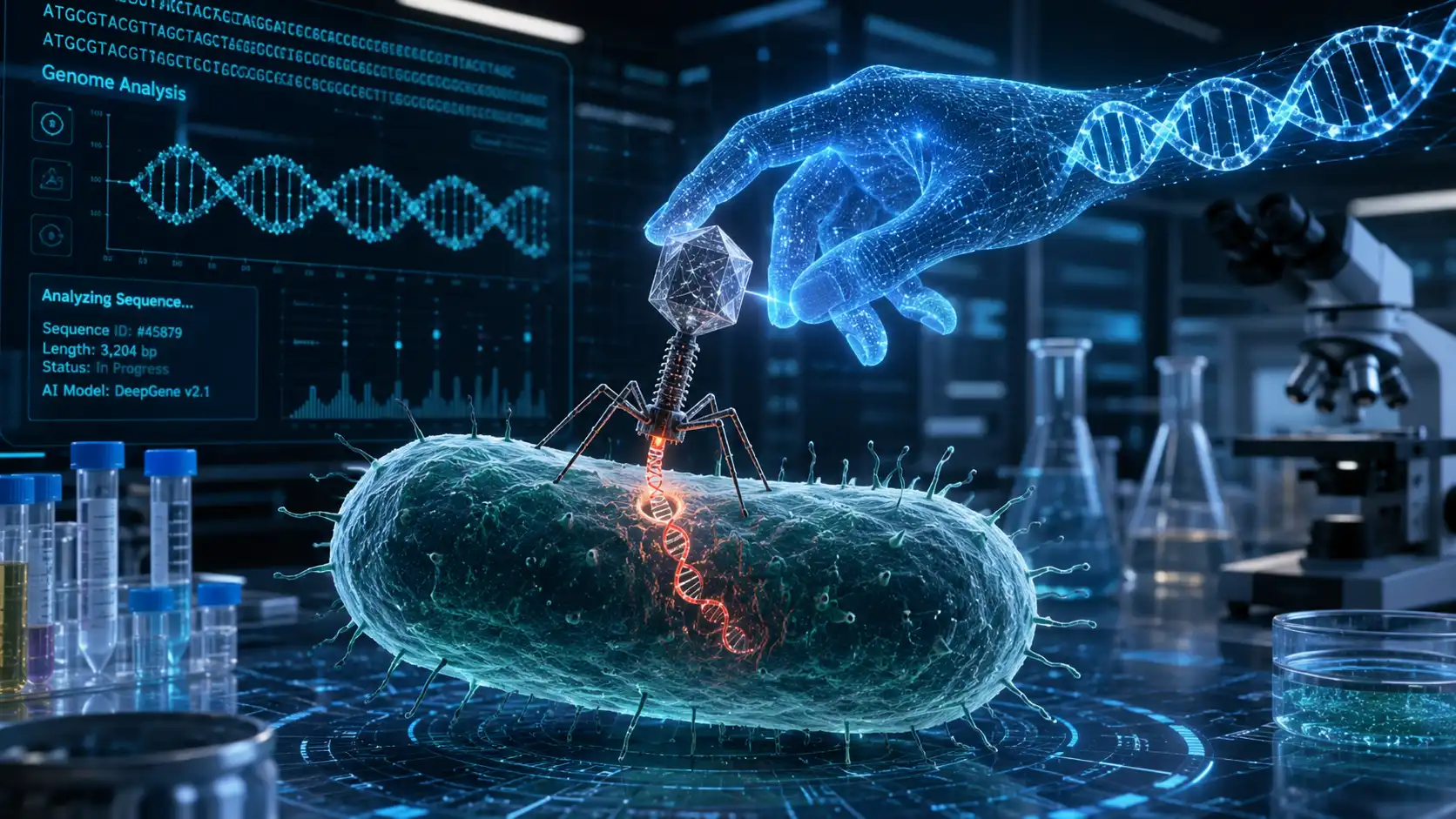
Researchers at Stanford University have developed, with the help of generative artificial intelligence, the first fully functional viruses that do not exist in nature. The study describes the creation of synthetic bacteriophages capable of eliminating drug-resistant bacteria in laboratory tests while also reigniting the debate over the biosafety challenges associated with this technology.
The engineered microorganisms belong to the bacteriophage group—viruses that infect only bacteria and pose no risk to humans. The project was led by chemical engineer Brian Hie and Ph.D. candidate Samuel King, who used a genomic language model called Evo 2 to generate entirely new DNA sequences.
According to the researchers, the system was trained on the genetic code of approximately two million bacteriophages. Using this dataset, the AI generated thousands of novel genetic combinations designed to target resistant strains of Escherichia coli (E. coli).
To reduce biological risks, the team excluded genetic sequences from viruses that infect humans, animals, or plants from the training data. After the computational phase, the researchers synthesized approximately 300 artificial genomes based on the bacteriophage ΦX174. Of those, 16 proved to be fully viable.
According to the authors, a cocktail composed of these synthetic viruses rapidly eliminated bacterial strains that had developed resistance to naturally occurring bacteriophages. The study was published in the scientific journal Science.

Researchers led by Brian Hie reported that some of the sequences proposed by Evo 2 outperformed the original bacteriophage in laboratory tests. According to Hie, using genetically diverse viral cocktails could make it more difficult for bacteria to develop resistance to treatment, increasing the therapeutic potential of the approach.
The authors also emphasize that the ability to design custom genomes for specific pathogens could accelerate the development of new therapies against antibiotic-resistant infections, one of the most pressing challenges in modern medicine.
At the same time, the research has sparked renewed debate over the limits of artificial intelligence in biotechnology. In an accompanying analysis article published alongside the study, Tom Inglesby and Moritz Hanke of the Johns Hopkins Center for Health Security argue that generative AI has already reached the point where it can design viral genomes, while the governance frameworks needed to oversee and regulate such capabilities are still evolving.

Other experts have called for a balanced assessment of the risks. Tom Ellis of Imperial College London noted that the engineered virus has one of the smallest genomes known and is among the simplest to synthesize. Meanwhile, Filippa Lentzos, an international security researcher, argued that future regulatory frameworks should address both DNA synthesis oversight and access to artificial intelligence models capable of generating genetic sequences.
As the debate over regulation continues, the Evo 2 model has been released as open-source software, allowing researchers to explore new biomedical applications and develop innovative strategies to combat antibiotic-resistant bacterial infections.
Quer continuar acompanhando conteúdos como este? Junte-se a nós no Facebook e participe da nossa comunidade!
Seguir no Facebook