Aliens exist — they just haven’t visited Earth yet


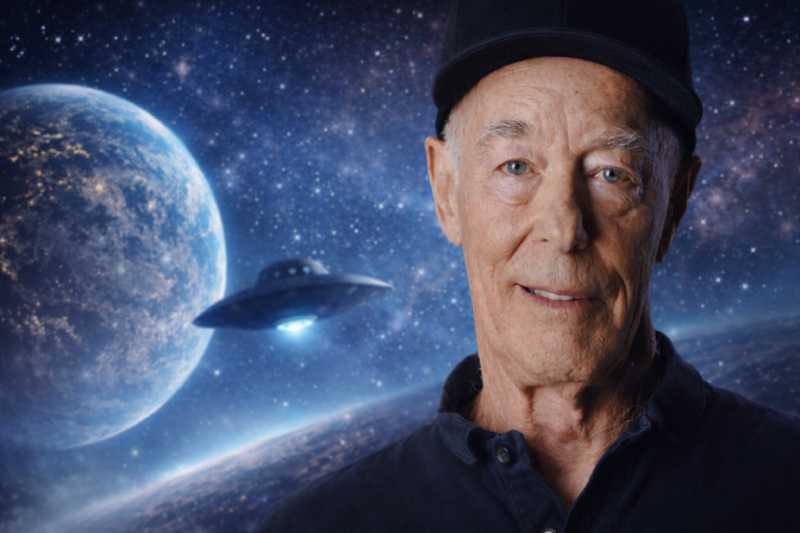
In his statement, veteran space engineer Dr. Gentry Lee, with more than five decades of experience at the National Aeronautics and Space Administration (NASA), said that the existence of extraterrestrial life in the universe is virtually inevitable. However, he made a crucial distinction: there is no reliable evidence that alien civilizations have visited Earth.
Lee, currently chief engineer in the Solar System Exploration Directorate at the Jet Propulsion Laboratory, spoke at a recent meeting of the American Association for the Advancement of Science (AAAS) in Phoenix, Arizona. In his remarks, he made it clear that although the universe contains an almost unimaginable number of planets—about one trillion in our galaxy alone if the sample observed by the Kepler Space Telescope is representative—that does not translate into extraterrestrial visits to Earth.
According to Lee, there is no verifiable record that alien spacecraft or any kind of machine of non-terrestrial origin has landed on or operated on our planet. “If you believe that, you are being deceived,” the engineer said, debunking several popular conspiracy theories.
This type of statement stands in direct contrast to rumors and reports that have circulated for decades about sightings of UFOs, theories of governments hiding evidence, and even claims of secret programs that allegedly recovered extraterrestrial technology. Despite accounts from former military personnel and leaked documents suggesting the existence of recovered materials, such reports do not constitute confirmed scientific evidence and remain in the realm of speculation and conjecture.
Lee also emphasized that the statistical probability of life elsewhere is extremely high. This is due to the enormous number of exoplanets in habitable zones discovered by missions such as the Kepler Space Telescope, which monitors distant stars in search of Earth-like worlds. These planets—such as the TRAPPIST-1e system, located about 40 light-years away—are considered some of the best candidates for hosting life, although there is still no concrete confirmation.
In addition to exoplanets, moons within our own solar system, such as Enceladus and Titan, have attracted scientific interest because of the possibility of conditions favorable to microbial life. However, so far, none of these observations has provided conclusive evidence of alien life.
Lee’s remarks come amid intense public and political interest in the UFO phenomenon and extraterrestrial life. Recently, high-profile public figures—including former Presidents of the United States—have made public comments about the possibility of alien life, fueling debate and speculation on social media and in traditional media.
Donald Trump even called for the release of classified documents related to sightings of unidentified aerial phenomena, a move that generated significant public attention. In response, scientists like Lee emphasize that releasing documents does not necessarily imply confirmation of aliens on the planet, but it may help clarify phenomena that still lack a scientific explanation.
For Lee and other researchers involved in space missions, the search for life beyond Earth is one of humanity’s most profound scientific priorities. Advances in telescopes and space probes may, in the future, lead to revolutionary discoveries—including signals of intelligent life—even if we have not seen extraterrestrial visitors here.
In this context, the scientific community continues to advocate for a rigorous process of investigation and data verification before drawing any conclusions about alien life. While popular accounts and conspiracy theories continue to circulate, there is no confirmed scientific evidence that aliens have visited Earth — but the possibility of life in other corners of the cosmos remains one of the greatest mysteries challenging researchers and philosophers alike.
Quer continuar acompanhando conteúdos como este? Junte-se a nós no Facebook e participe da nossa comunidade!
Seguir no Facebook