Crannog in Scotland Reveals Structure Older Than Stonehenge


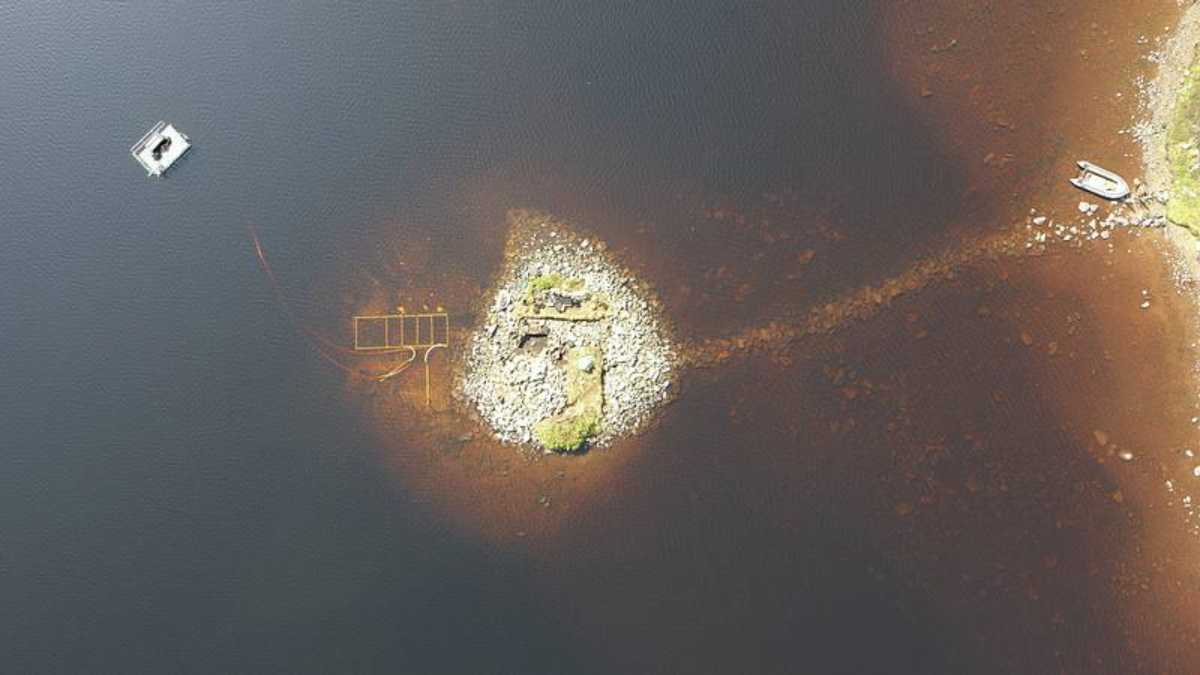
Archaeologists in the United Kingdom have identified a prehistoric artificial island submerged in a lake in Scotland that may be as old as Stonehenge. The structure, built more than 5,000 years ago, was discovered in Loch Bhorgastail on the Isle of Lewis and is preserved beneath a formation that appeared to be nothing more than a natural rocky island.
The discovery was made by researchers from University of Southampton in partnership with University of Reading. Studies indicate that the site is a “crannog,” the name given to small artificial islands built in lakes throughout the Scottish Highlands.
According to the researchers, the structure was erected during the Neolithic period, between 3800 BC and 3300 BC, predating by centuries constructions that had previously been associated mainly with the Iron Age and the medieval period.

Archaeologist Stephanie Blankshein, who led the research at the University of Southampton, explained that hundreds of crannogs in Scotland still remain unexplored. She stated that the new evidence shows some of these artificial islands are far older than previously believed.
Excavations revealed that the crannog was not a floating platform. Neolithic builders created a circular foundation of logs and vegetation measuring about 23 meters in diameter on the muddy lakebed. Tons of stones were then piled on top until the structure rose above the water.

Additional layers and a submerged stone causeway were added centuries later, during the Bronze and Iron Ages.
One of the aspects that most intrigued researchers was the preservation of the wood after five millennia. According to the scientists, the anaerobic environment at the bottom of the lake — with no oxygen present — prevented the activity of fungi and bacteria responsible for decomposing organic material.
Divers also recovered hundreds of fragments of Neolithic pottery, including bowls and containers with traces of food. The objects suggest that the artificial island served as a space for social gatherings and communal activities.

To document the archaeological site, the team developed a new stereophotogrammetry technique designed for shallow waters. The method made it possible to combine images captured above and below the waterline into a continuous three-dimensional model.
Professor Fraser Sturt, director of the Southampton Marine and Maritime Institute, stated that sediment, waves, vegetation, and light distortion have traditionally made the use of photogrammetry in shallow areas difficult. According to him, the new approach could facilitate the exploration of other submerged crannogs in the United Kingdom.
The results of the study were published in the scientific journal Advances in Archaeological Practice.
Quer continuar acompanhando conteúdos como este? Junte-se a nós no Facebook e participe da nossa comunidade!
Seguir no Facebook